


Copyright A Bar Above
Beyond Cocktails: Other Uses of Fine Mesh Strainers in the Kitchen
Copyright A Bar Above
Using Fine Mesh Strainers for Tea & Coffee
Copyright A Bar Above
Creative Uses of Fine Mesh Strainers
Straining Tea Leaves – Use it to strain tea leaves from hot water or tea after steeping, ensuring a smooth, debris-free cup of tea. Or use it to soak the tea leaves in hot water if you don’t have a small, loose leaf tea strainer on hand.
Straining Fruit Juices – Fine mesh strainers can be helpful when straining fruit juices like lemon, lime, and orange, which can be mixed with sparkling water or other ingredients to make delicious, refreshing cocktails and homemade flavored soda water.
Separating Custard Or Puree – If you need to separate the solids from a purée or custard, this can be an effective tool for doing so. Pour the mixture into the strainer and use a spoon to press it through the mesh, leaving behind any solid bits.
Removing Seeds From Tomatoes – Use a fine mesh strainer to remove seeds from tomatoes before making salsa or other tomato-based sauces.
Filtering Cold Brew Coffee – Cold brew coffee can be delicious, but it’s often left with a sediment of coffee grounds. Use this strainer to filter out the grounds and enjoy a smooth, clean-tasting coffee.
Separating Whey From Yogurt – If you make homemade yogurt, use this strainer to separate the whey from the yogurt solids. This process will create a thick, creamy yogurt– perfect for use in recipes or as a healthy snack.
Filtering Homemade Kombucha – When your kombucha is ready and you want to separate from the scoby, use your fine mesh strainer to make sure that no pieces remain in your drink.
Copyright A Bar Above
How to Choose the Right Fine Mesh Strainer for Different Uses
Copyright A Bar Above
Caring for Your Fine Mesh Strainer
Clean It After Every Use – After straining a cocktail, rinse the strainer under hot water to remove any debris or residue. Use a soft brush or sponge to remove any stubborn particles, and dry it thoroughly. It’s a good idea to give it a good rinse even if you can throw it in the dishwasher after.
Hand-Wash With Mild Soap – If yours isn’t dishwasher safe, hand-wash it with mild soap and warm water. Avoid using abrasive cleaners or scrubbers that can damage the metal or coil.
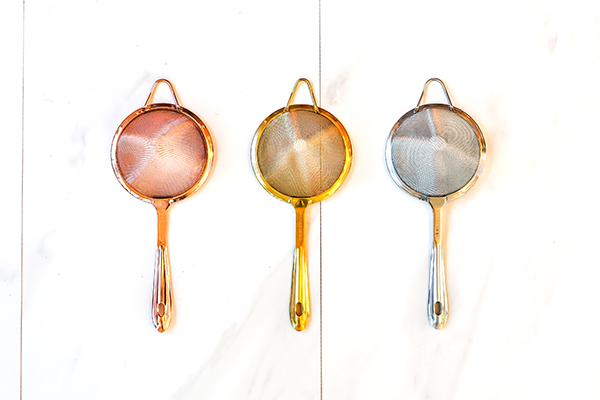
Store It Properly – Store it in a dry place, away from moisture and direct sunlight, to prevent corrosion or discoloration. Consider storing it in a drawer or container to avoid any potential damage– or hang it on your kitchen wall if you have our nifty strainer with a handle hanging hole.
Polish It Occasionally – If you have a brass strainer, it’s recommended to periodically polish it to preserve the shine. You can use brass polish or a mixture of lemon juice and baking soda, applying it gently with a soft cloth to prevent any damage to the metal. This maintenance will help ensure that it remains visually appealing and functional for an extended period, but it does take extra work– which is one of the reasons we recommend buying stainless steel!
Replace It If Damaged – It’s important to regularly inspect your strainer for any indications of wear or damage, such as a coil that has become loose or bent or the presence of rust. If you notice any of these signs, it may be time to replace the strainer so that it continues to be both functional and hygienic.
Copyright A Bar Above
Best Fine Mesh Strainers and Barware
Copyright A Bar Above
